Print-on-Demand Posters: A Powerful Tool for Branding, Revenue, and Business Growth
July 23, 2026
Back-to-School POD Opportunities: How Print-on-Demand Can Help Teachers, Families, Students, and Growing Businesses
August 6, 2026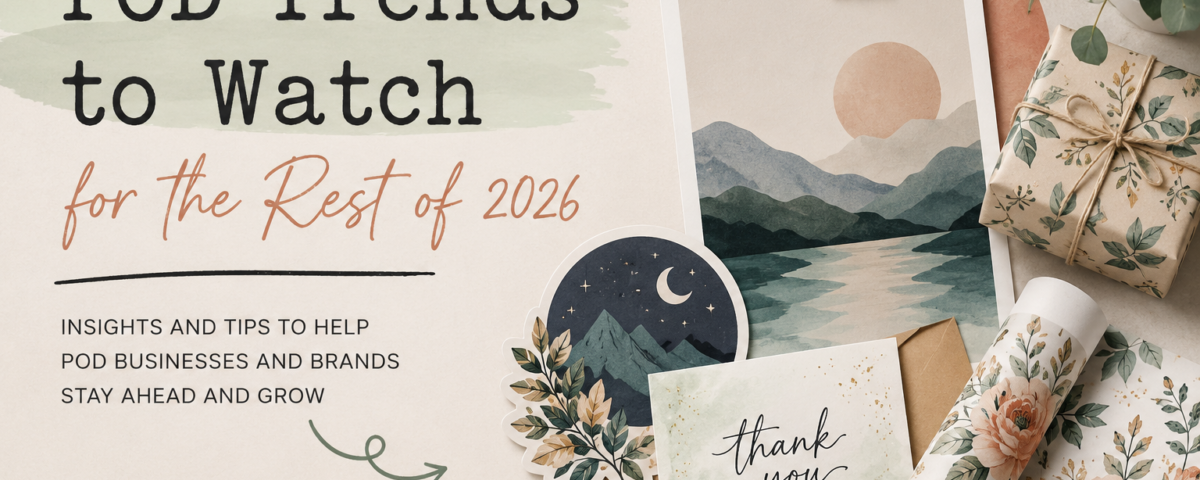
The print-on-demand (POD) industry has entered a new phase. While explosive growth over the past several years brought thousands of new sellers into the market, the second half of 2026 is proving that success is no longer about simply listing products online. Consumers have more choices than ever, marketplaces have become increasingly competitive, and buyers are placing greater value on originality, quality, and the overall customer experience.
For POD businesses and brands, this presents an opportunity rather than a challenge. The companies that adapt to changing buying habits, invest in thoughtful product development, and build recognizable brands are finding themselves in a much stronger position than those relying solely on trending designs. Here are the trends shaping the remainder of 2026, and how your business can take advantage of them.
Buyers Want Collections, Not Individual Products
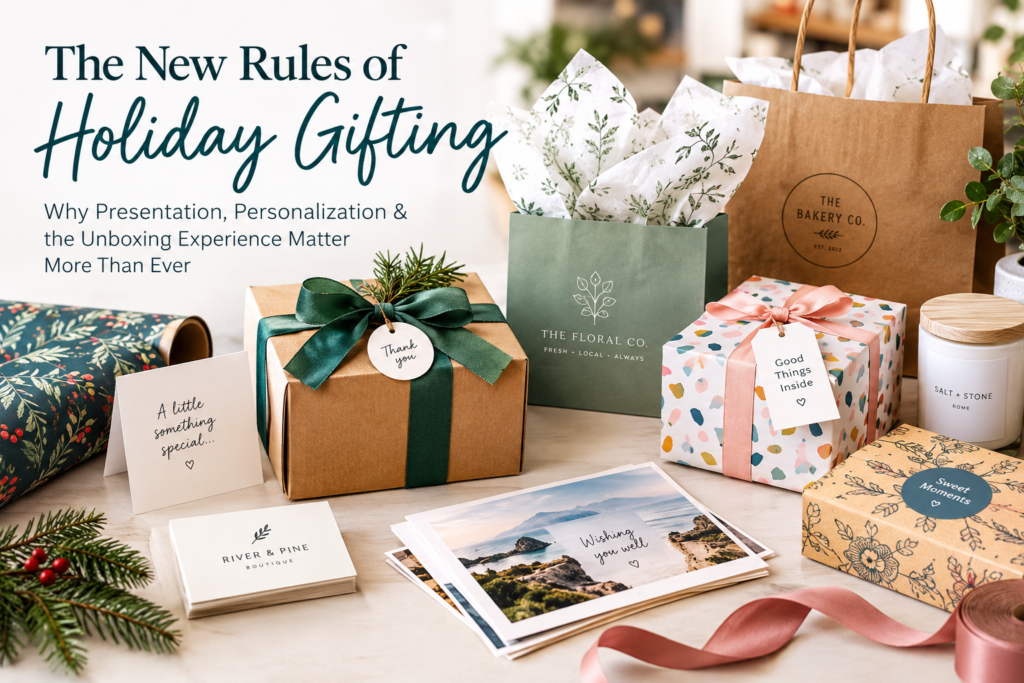
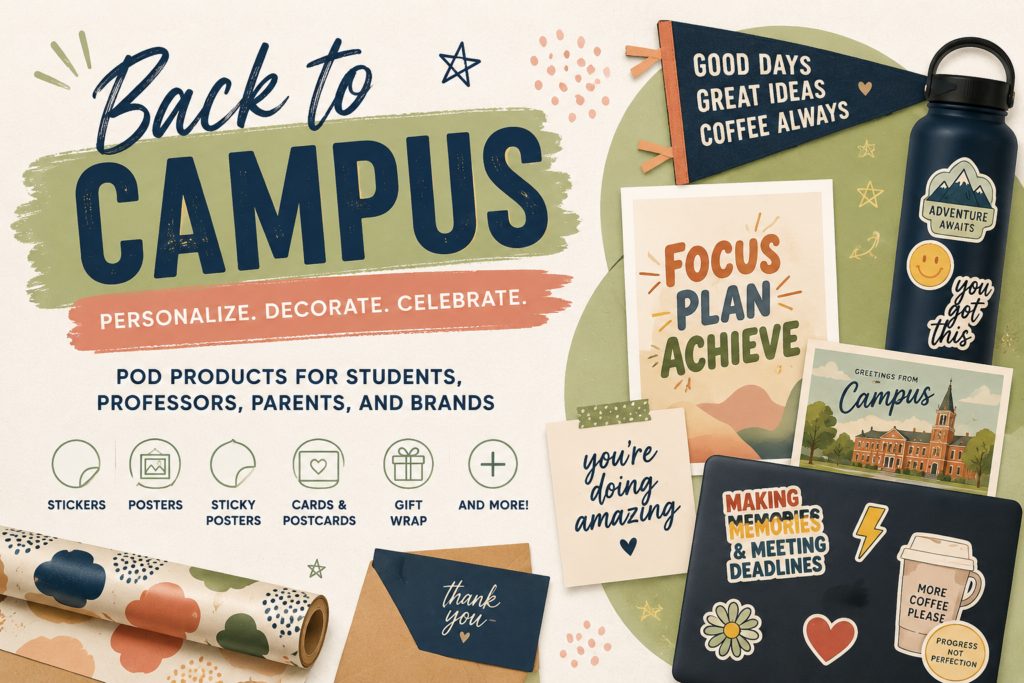
One of the most significant shifts in consumer behavior is the move away from one-off purchases toward coordinated product collections. Instead of purchasing a single sticker or poster, customers increasingly want matching gift wrap, greeting cards, notebooks, postcards, and wall art that share a consistent theme or design aesthetic.
This trend creates a tremendous opportunity for POD sellers because the artwork has already been created. Extending an existing design across multiple products requires relatively little additional work while dramatically increasing the average order value.
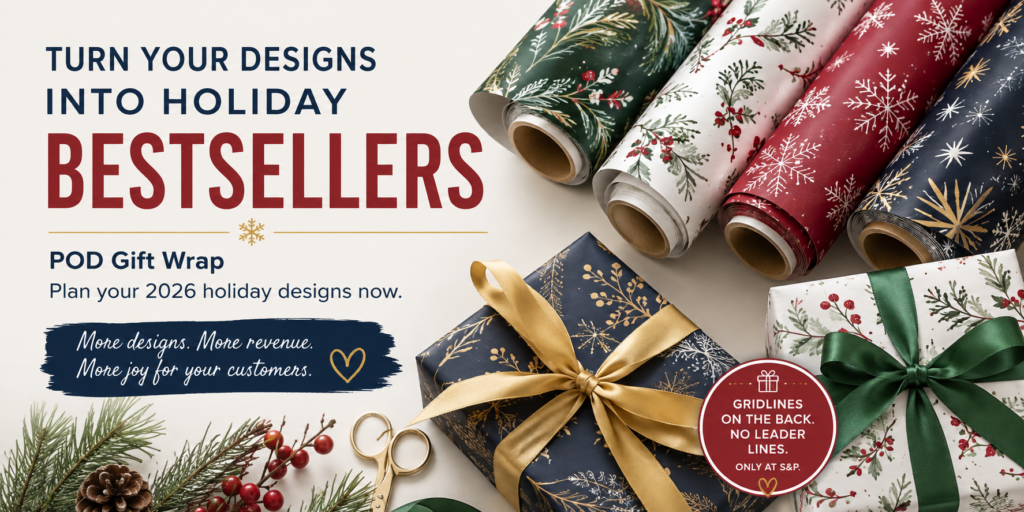
For example, a botanical illustration that performs well as a poster can easily become a matching sticker collection, wrapping paper, a greeting card series, a postcard set, or a journal cover. Holiday artwork can evolve into complete seasonal collections that encourage customers to purchase multiple coordinating products.
Rather than asking, “What should I design next?” successful sellers are increasingly asking, “What else can this design become?”
Premium Products Continue to Outperform Budget Alternatives
Price remains important, but quality has become an even bigger purchasing factor. Customers have grown accustomed to ordering customized products online, and they now expect professional print quality, durable materials, vibrant colors, and premium finishes.
This trend is especially noticeable with products such as holographic stickers, clear stickers, textured greeting cards, heavyweight posters, premium gift wrap, and luxury cardstock invitations. Buyers are willing to spend more when they perceive a meaningful improvement in quality.
For brands, this means emphasizing craftsmanship throughout the customer journey. Product listings should highlight paper weights, specialty finishes, premium inks, packaging quality, and close-up photography that demonstrates texture and print detail. Customer reviews showcasing quality have become one of the strongest conversion tools available.
Competing solely on price has become increasingly difficult. Competing on perceived value is proving far more sustainable.
Personalization Has Become the Standard
Consumers have come to expect personalized products, and POD technology makes customization easier than ever. Beyond adding names to products, customers are looking for meaningful personalization that reflects important moments, interests, or relationships.
Greeting cards featuring customized messages, personalized gift wrap for birthdays and weddings, family-themed posters, custom sticker packs for small businesses, and personalized stationery continue to generate strong demand.
Brands that make customization simple and clearly communicate turnaround times are finding higher conversion rates and greater customer satisfaction. Even small personalization options can differentiate a product from countless generic alternatives found on online marketplaces.
Small Businesses Are Becoming a Major Customer Segment
While consumer sales remain strong, more POD companies are discovering significant growth by serving businesses instead of individual shoppers.
Small businesses, creators, Etsy sellers, event planners, nonprofits, schools, and local organizations frequently need professionally printed stickers, promotional posters, branded postcards, custom greeting cards, event signage, and seasonal packaging materials. Because many of these customers reorder throughout the year, they often represent much higher lifetime value than one-time retail buyers.
Businesses also appreciate suppliers that offer flexible quantities without requiring large minimum orders. Print-on-demand is uniquely positioned to meet this need.
Developing dedicated marketing specifically for business customers, including branded packaging, promotional campaigns, retail displays, and event materials, can open a new revenue stream that complements traditional consumer sales.
Seasonal Planning Is Starting Earlier Every Year
Holiday shopping patterns continue to shift earlier, and 2026 is no exception. Retailers and online sellers are preparing seasonal product launches months in advance to give products time to gain marketplace visibility before peak shopping periods.
Rather than releasing holiday collections shortly before Halloween, many successful sellers now introduce fall products during late summer, followed by Christmas, Hanukkah, and New Year collections well before the holiday season officially begins.
The same strategy applies to Valentine’s Day, Mother’s Day, Father’s Day, graduation season, weddings, and back-to-school campaigns.
Planning content, photography, product launches, blog articles, and email marketing calendars several months ahead allows brands to capture early buyers while giving search engines and marketplaces more time to index new products.
AI Is Becoming a Creative Partner, Not a Replacement
Artificial intelligence continues to influence the POD industry, but the most successful businesses are using AI as a productivity tool rather than allowing it to replace their creative process.
Many brands are using AI to generate product descriptions, improve SEO, brainstorm collection ideas, develop marketing campaigns, analyze customer feedback, write blog content, and identify emerging trends. Designers are also using AI to accelerate concept development before adding their own artistic expertise.
Consumers, however, continue to value originality. Brands with authentic design styles, recognizable aesthetics, and compelling brand stories consistently outperform generic AI-generated marketplaces filled with similar-looking artwork.
The competitive advantage lies in combining technology with human creativity rather than relying on either alone.
Sustainability Remains an Important Purchase Driver
Environmental considerations continue to influence purchasing decisions, particularly among younger consumers. While sustainability alone rarely drives a purchase, it often becomes the deciding factor between similar products.
Many shoppers actively seek recyclable packaging, responsibly sourced paper products, water-based inks, reduced waste manufacturing, and local fulfillment that minimizes shipping distances.
Brands don’t need to overstate their environmental efforts. Simply being transparent about materials, production practices, and fulfillment processes helps build trust with environmentally conscious customers.
Gift wrap made from responsibly sourced paper, recyclable greeting cards, and durable posters designed to last all align well with today’s sustainability expectations.
Social Proof Is More Influential Than Traditional Advertising
Consumers increasingly trust real people over polished advertisements. Product demonstrations, customer photos, creator reviews, unboxing videos, and behind-the-scenes production content continue to outperform traditional promotional messaging.
This is especially true for products where quality matters. Seeing someone apply a sticker, unwrap premium gift wrap, frame a poster, or showcase a greeting card’s finish provides reassurance that static product images simply cannot match.
Brands should encourage customers to share photos of finished products, highlight user-generated content across marketing channels, and collaborate with creators who genuinely appreciate product quality. Authentic demonstrations often yield stronger, longer-lasting results than highly scripted promotional campaigns.
Search Is Becoming More Conversational
As AI-powered search continues to evolve, consumers are searching differently than they did just a few years ago. Instead of typing short keyword phrases like “funny stickers,” buyers increasingly ask complete questions or search for specific use cases.
They may search for “gift wrap ideas for a baby shower,” “motivational posters for a home office,” “custom thank-you cards for small businesses,” or “waterproof stickers for laptops.”
This shift rewards brands that publish educational content alongside product listings. Helpful blog articles, gift guides, decorating inspiration, packaging ideas, and design trend roundups provide valuable information while naturally introducing relevant products.
The businesses that educate customers are becoming easier to discover across both traditional search engines and AI-powered search experiences.
What to Expect in the Coming Months
The remainder of 2026 offers tremendous opportunities for print-on-demand businesses willing to think beyond individual product sales. Success is increasingly driven by creating cohesive product collections, emphasizing premium quality, serving both consumers and businesses, embracing thoughtful personalization, and building authentic brands that customers remember.
Whether your catalog includes stickers, posters, gift wrap, greeting cards, postcards, stationery, wall art, or seasonal merchandise, the underlying strategy remains the same: create products that solve real customer needs while delivering an exceptional buying experience.
The print-on-demand market is no longer defined by who can upload the most designs. It belongs to brands that create meaningful collections, tell compelling stories, consistently deliver quality, and continue to evolve alongside their customers. Those businesses won’t simply keep up with the trends, they’ll help shape what’s next.