Halloween Is More Than Costumes: How to Use POD to Grow Your Business This Season
September 16, 2026
Owning a print-on-demand business can be a great way to turn creative ideas into products without investing in a warehouse full of inventory. But while POD makes getting started easier, it doesn’t mean building a successful product business is automatic.
Many moving parts are involved, and new sellers often learn the same lessons the hard way.
If you’re just getting started, or you’ve been selling for a while but aren’t seeing the results you expected, here are five common POD mistakes to watch for, along with some practical ways to avoid them.
1. Trying to Sell Everything to Everyone
One of the easiest things to do when you discover POD is get carried away with all the possibilities.
There are so many products, designs, and niches to explore that it can be tempting to add as much as possible to your store. The problem is that a huge catalog doesn’t necessarily mean more sales.
In fact, too many unrelated products can make it harder for customers to understand what your brand is all about.
Instead, start with products that make sense for your audience. Consider what your customers already buy and what other products might complement those purchases.
For example, if you sell products to small businesses, branded stickers, postcards, greeting cards, and gift wrap may make more sense than adding a completely unrelated product category.
Once you know what’s getting attention and generating sales, you can build from there.
Start focused, see what works, and expand based on what you learn.
2. Choosing a POD Partner Based Only on Price
Price is important. But it shouldn’t be the only factor when choosing where to print your products.
Your customers won’t see what you paid for the product. They’ll see the finished product, and their experience with it reflects on your business.
That’s why samples matter.
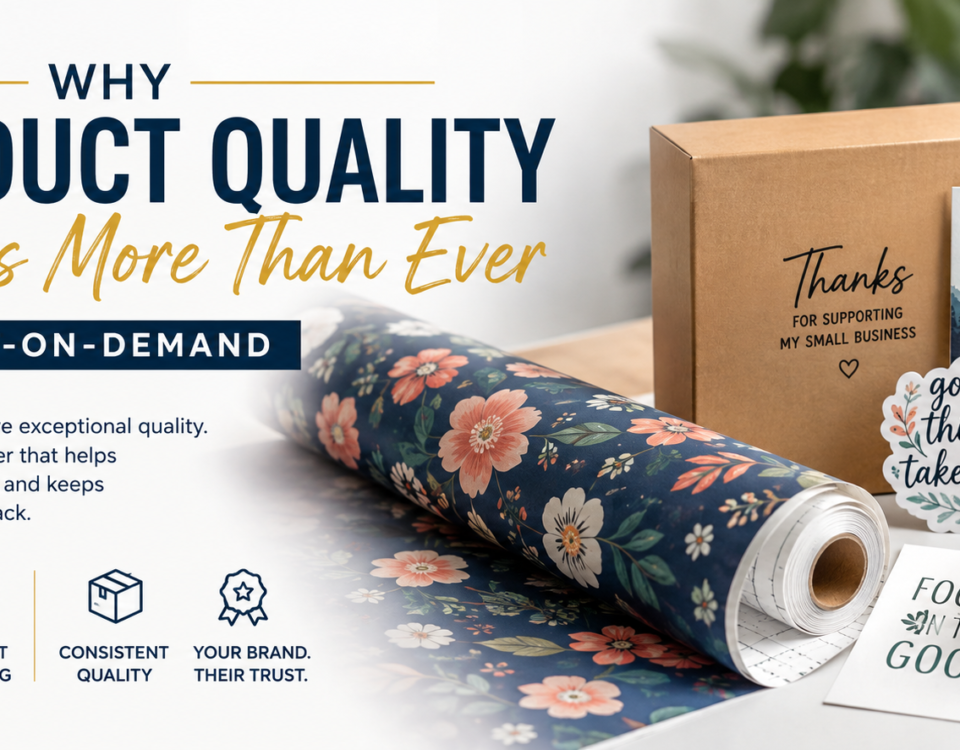
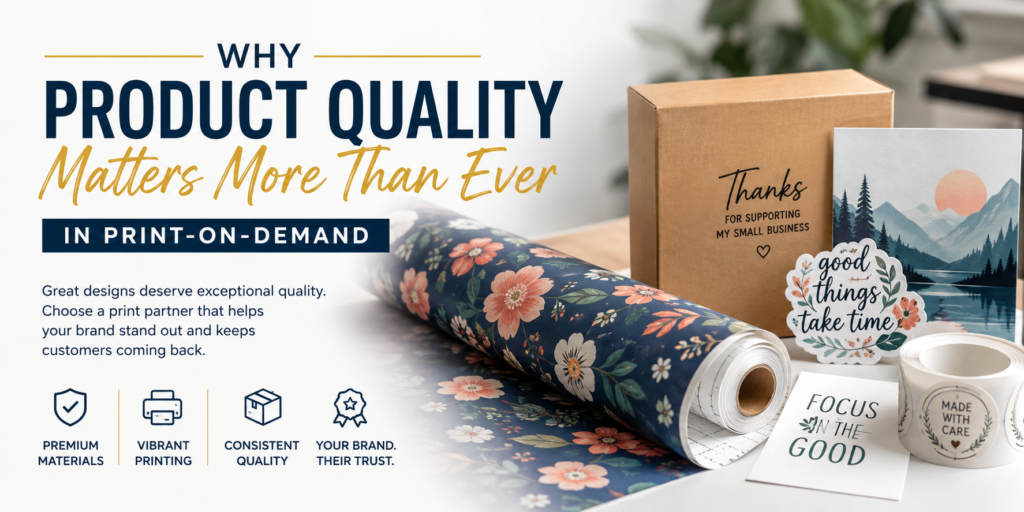
Before adding a new product to your store, order one yourself. Look at the print quality. Feel the material. Check the colors. See how it is packaged and shipped.
If it’s a product like gift wrap, use it. Does it feel substantial? Does the design look good when it’s wrapped around a real package? Would you be comfortable putting your brand name behind it?
Answer these questions before your customers do.
A POD partner that saves you a little money per order isn’t necessarily saving you money if inconsistent quality leads to unhappy customers, refunds, or poor reviews.
Look at the entire customer experience, not just the production price.
3. Waiting Too Long to Launch Holiday Products
If you’re planning to sell holiday products, timing matters.
One of the biggest mistakes new sellers make is waiting until the holiday season is already underway to launch their holiday collection.
By then, you’ve lost valuable time to get products in front of customers, test your listings, and build some momentum.
For the 2026 holiday season, September and October are key months to get your products ready and into the marketplace.
That means now is the time to be thinking about:
- Finalizing holiday designs
- Ordering samples
- Taking product photos and videos
- Creating product listings
- Writing descriptions and optimizing titles
- Planning email and social promotions
- Testing your ordering process
- Communicating production and shipping timelines
And don’t forget that your customers may need their holiday products long before they do.
A boutique offering gift wrapping, for example, may need to have its holiday supplies in hand well before Thanksgiving. A business ordering branded cards or packaging may need those products weeks before its holiday campaign launches.
Don’t plan around when the customer wants to use the product. Plan around when they need to have it in hand.
4. Having a Great Product but a Weak Product Listing
You can have a fantastic product and still struggle to sell it if your listing doesn’t clearly explain why it’s worth buying.
Think about your product page from the customer’s perspective.
Can they quickly figure out what the product is, how they can use it, what size it is, and what makes it different?
Good product photography is just as important.
Don’t only show the product by itself. Whenever possible, show it being used.
A greeting card looks much more appealing when customers can picture giving it to someone. Show a sticker on packaging, a laptop, or another relevant surface. Show gift wrap actually wrapping a gift.
This is particularly important for products that customers may not immediately think of using in a particular way.
Take custom gift wrap. It isn’t just for wrapping presents at home. Businesses can use it for customer orders, gift-wrapping services, corporate gifts, holiday promotions, subscription boxes, influencer packages, and more.
Sometimes the product isn’t the problem. The customer just hasn’t been shown what they can do with it.
5. Assuming Your Products Will Sell Just Because They’re Live
Getting your products listed is only the beginning.
One of the biggest surprises for new POD sellers is realizing that creating the product is often easier than getting people to buy it.
Your customers need to see your products, often more than once, before they’re ready to buy.
That might mean promoting your products through email, social media, Pinterest, blogging, influencer partnerships, paid advertising, or other channels that make sense for your audience.
You don’t have to be everywhere. Pick the channels where your customers are most likely to be and focus your efforts there.
And don’t overlook your existing customers.
If someone has already purchased from you, they may be interested in another product that complements what they’ve already bought. A customer who purchased branded stickers, for example, might also be interested in matching postcards, cards, or gift wrap.
Don’t just focus on finding new customers. Give your existing customers more reasons to buy.
Getting Ready for the Holiday Selling Season
The holidays can be a great opportunity for POD sellers, but successful holiday selling usually starts well before the holidays themselves.
Here are a few things you can do now to put yourself in a better position.
Build Coordinated Collections
Instead of creating one holiday product at a time, think about how your designs can work across multiple products.
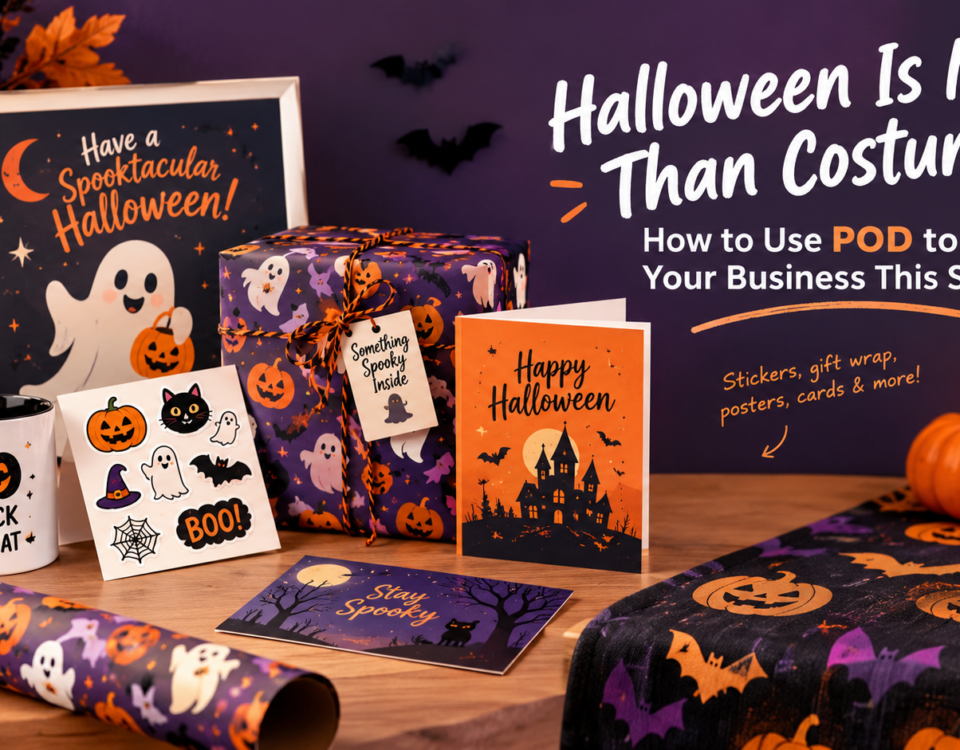
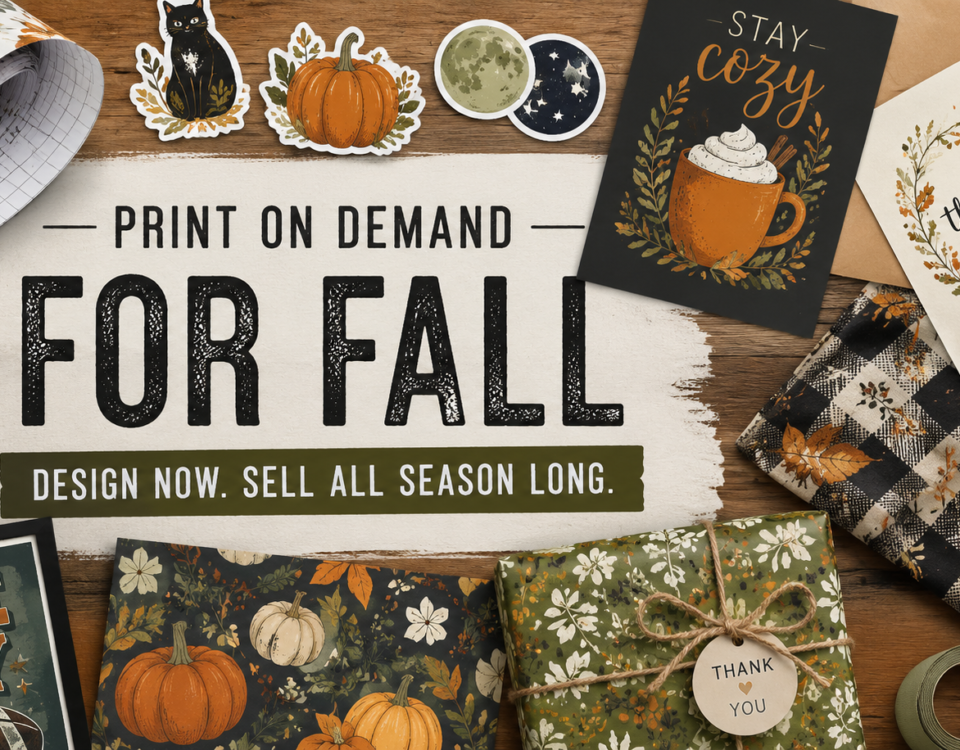
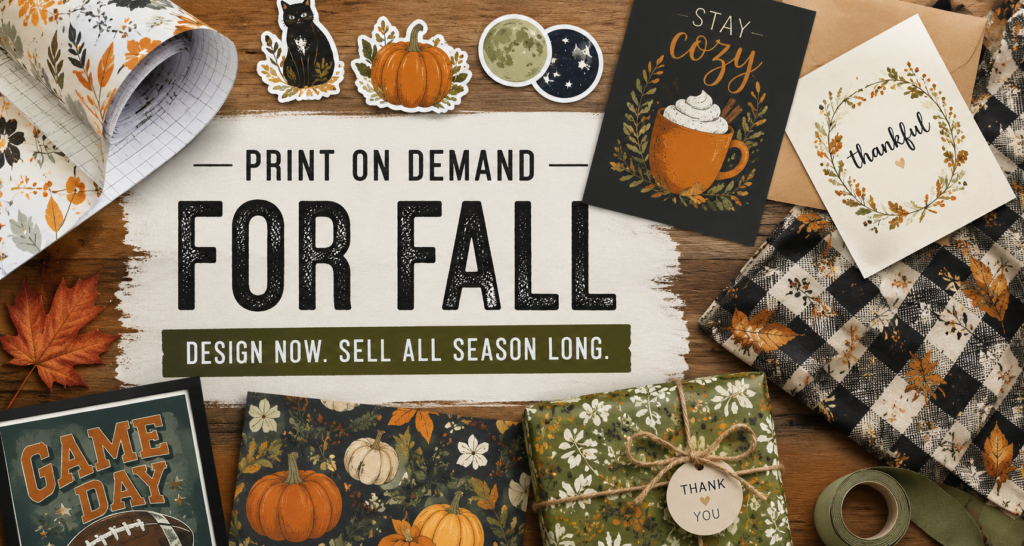
A single design might work on gift wrap, greeting cards, postcards, stickers, and other products. This gives customers the opportunity to create a coordinated look and gives you multiple ways to generate sales from the same design work.
Start Promoting Early
Don’t wait until December to tell people about your holiday products.
A simple progression might look something like this:
September: Introduce your holiday collection and start building awareness.
October: Showcase products in use and encourage early orders.
November: Increase your holiday promotions and focus on gift-giving, events, and business needs.
December: Focus on last-minute shoppers and clearly communicate any remaining production and shipping deadlines.
Timing will vary depending on your products and customers, but the idea is simple: give people time to discover your products and buy.
Give Customers Ideas
Don’t assume customers will automatically know how to use your products.
Show them.
If you’re selling custom gift wrap, demonstrate how a boutique can use it as part of its gift-wrapping service. Show how a business can use it for branded customer orders. Show how it can be incorporated into holiday gift baskets or corporate gifting.
The more real-world examples you provide, the easier it is for customers to see where your product fits into their own business.
Pay Attention to Deadlines
This is especially important during the holidays.
Make production and shipping timelines easy to find. If you have a deadline for bulk orders, make sure customers know about it well in advance.
A customer who knows they need to order by a certain date is much more likely to act than someone who assumes they can place an order whenever they’re ready.
And remember: your deadline isn’t necessarily your customer’s deadline.
If they need your products for a holiday promotion, event, or customer order, they need to have them in hand before that date.
POD Is a Business, Not Just a Product Catalog
Print on demand has made it easier than ever to create and sell products. But the sellers who build sustainable businesses aren’t simply uploading designs and hoping for sales.
They’re paying attention to their customers. They’re testing products. They’re looking at quality. They’re thinking about how products fit together. And they’re marketing consistently.
Most importantly, they’re learning as they go.
You don’t have to get everything right on your first launch. Start with a manageable collection, pay attention to what your customers respond to, and use those insights to improve your next launch.
And if you’re planning to take advantage of the holiday season, don’t wait until the holiday rush is here.
Get your products ready, get them in front of customers, and give yourself enough time to learn what works.
That’s one of the best advantages of POD: you can test, learn, and grow without having to bet the business on one big inventory order.