The POD Product Mix That Drives Sales Tips for Selecting the Right Fulfillment Partner
April 17, 2026
Graduation Season + Print-on-Demand: Creative Ways to Turn Milestones Into Meaningful Products
May 14, 2026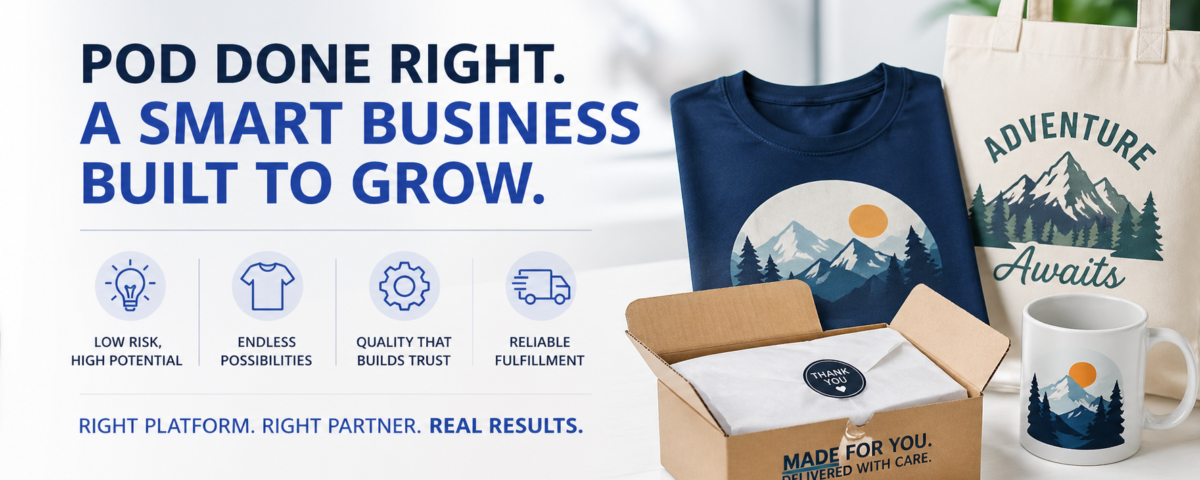
The rise of print-on-demand (POD) has fundamentally changed how products are created, sold, and fulfilled. What was once a high-risk, inventory-heavy business model has evolved into a streamlined, low-barrier opportunity for entrepreneurs, creators, and brands of all sizes. But while POD makes launching a product line easier than ever, long-term success depends on one critical factor many overlook: choosing the right platform and the right printing partner.
Let’s break down why POD continues to grow and what separates thriving sellers from those who struggle to scale.
The Appeal of Print-on-Demand
At its core, POD is attractive because it removes many of the traditional barriers to entry:
- No inventory risk – Products are only produced after a sale is made
- Low startup costs – No need for bulk purchasing or warehousing
- Scalability – Easily expand product lines without operational complexity
- Flexibility – Test designs, niches, and trends with minimal financial exposure
For entrepreneurs, this means you can focus more on creativity, branding, and marketing, and less on logistics.
But that simplicity can be misleading.
Not All POD Setups Are Created Equal
While most platforms offer similar front-end experiences for uploading a design, listing a product, and starting to sell, the back-end fulfillment process can vary dramatically.
And that’s where many sellers run into problems.
Common issues include:
- Inconsistent print quality
- Long or unpredictable production times
- Poor packaging or presentation
- Limited product options or customization capabilities
These challenges don’t just impact operations, they directly affect your brand reputation, customer satisfaction, and repeat business.
Why Your Printing Partner Is Critical
Your printing partner is, in many ways, an extension of your brand. They are responsible for bringing your designs to life and delivering them to your customers. When that experience falls short, your customers don’t blame the printer, they blame you.
A strong production partner provides:
1. Consistent, High-Quality Output
Your designs should look as good in real life as they do on screen. Reliable color accuracy, material quality, and finishing are essential for building trust with your customers.
2. Reliable Fulfillment and Turnaround Times
Speed matters, but consistency matters more. Customers expect clear timelines and dependable delivery, not surprises.
3. Scalable Production Capabilities
As your business grows, your partner should be able to grow with you, handling increased order volume without sacrificing quality or turnaround.
4. Product Expansion Opportunities
The right partner doesn’t just fulfill orders, they help you expand. Whether it’s new formats, sizes, or product categories, innovation on the production side opens new revenue streams for your business.
Choosing the Right Platform vs. the Right Partner
Many sellers focus heavily on selecting the right sales platform, and for good reason. Ease of use, integrations, and marketplace exposure all matter.
But here’s the reality: The platform helps you sell the product. The printing partner determines whether customers come back.
A great storefront with poor fulfillment leads to negative reviews, refunds, and lost customers. On the other hand, a strong production partner can elevate even a simple product into a premium experience.
What to Look For
When evaluating your POD setup, consider both sides of the equation:
Platform Considerations:
- Ease of use and setup
- Integration with your sales channels
- Product catalog flexibility
- Fee structure and margins
Printing Partner Considerations:
- Proven print quality and consistency
- Transparent production timelines
- Strong packaging and presentation standards
- Ability to scale and innovate
The Bottom Line
Print-on-demand is one of the most accessible and scalable business models available today, but it’s not “set it and forget it.” The sellers who succeed long-term treat their POD operation like a real brand, not just a passive-income experiment.
That means making thoughtful decisions about how your products are made, not just where they’re sold.
Because in the end, your customer doesn’t see your platform or your workflow, they see the final product in their hands.
And that experience is everything.